
April 6, 2026 • IT Availability Leadership Corner
Program Management: The Importance of Communication
𝘐𝘯𝘴𝘪𝘨𝘩𝘵𝘴 𝘧𝘳𝘰𝘮 𝘉𝘪𝘭𝘭 𝘞𝘢𝘴𝘩𝘣𝘶𝘳𝘯, 𝘊𝘩𝘪𝘦𝘧 𝘎𝘳𝘰𝘸𝘵𝘩 𝘖𝘧𝘧𝘪𝘤𝘦𝘳
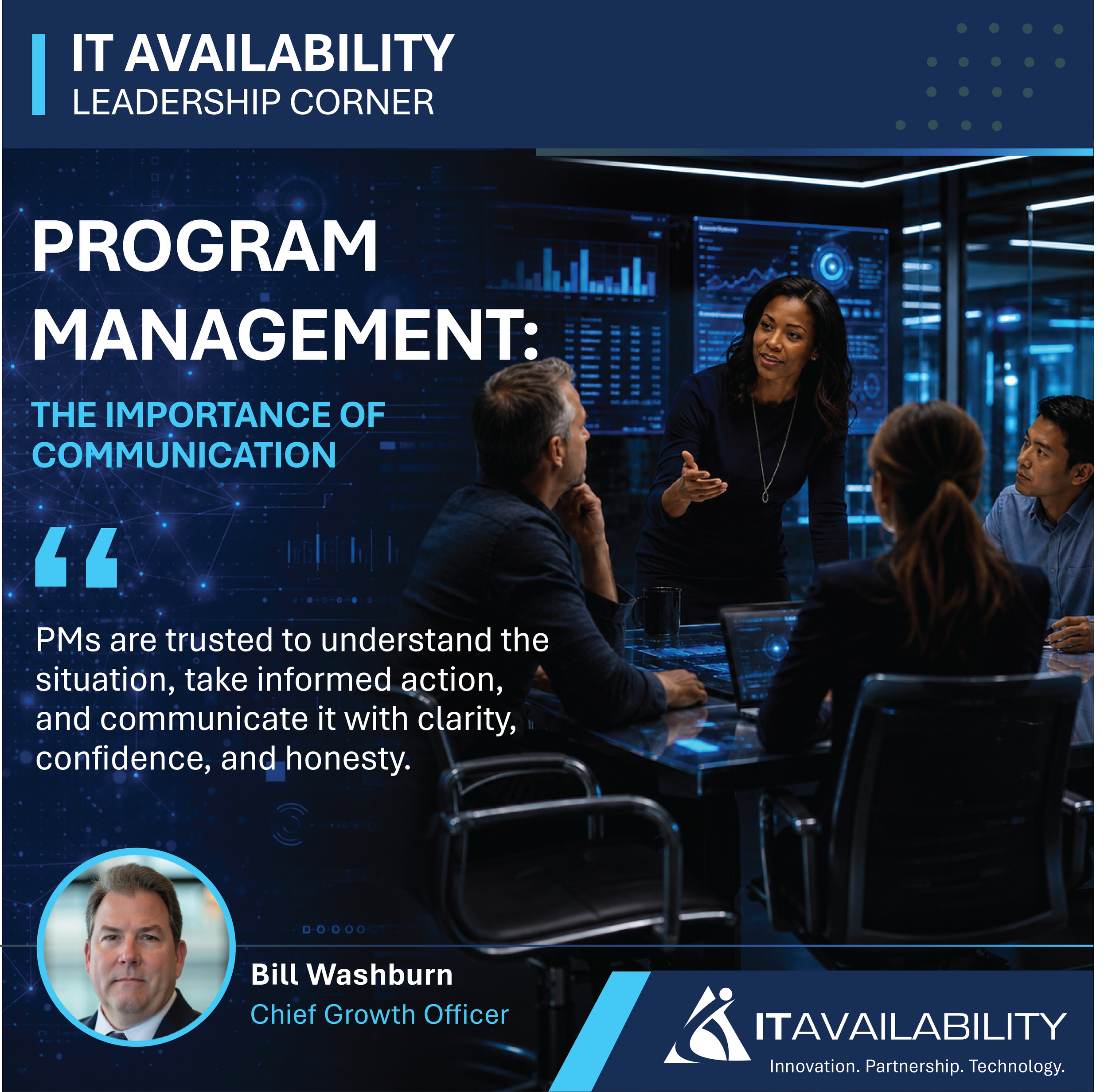
Communication is a common key to personal and professional success in nearly every domain—life, business, and sports. In government contracting (GovCon), it is vital to the success of the program, the Program Manager (PM), and the staff performing the work. The mark of a good PM is the ability to communicate effectively with customers, staff, and leadership. This vital communication is a 360° business requirement; when it is ineffective, it can reduce productivity, hamper schedules, and constrain delivery. When it is done well, communication resolves problems, highlights issues to mitigate risk, and clearly presents status so teams can get ahead of delays, adjust the schedule, and deliver on time.
A GovCon PM must focus on three key groups: customers, staff, and leadership. A critical element of this leadership approach is empowering the PM to be a decision maker. PMs should be trusted to navigate the nuances of the program, act decisively, and then clearly communicate the results, rather than waiting for approval on every decision. A PM must command all aspects of the program—financial performance, staffing, and execution. It is essential for PMs to be the leaders government customers turn to in order to address any question, resolve any problem, and recognize any achievement.
Communication tools can further strengthen a PM’s effectiveness. A RACI matrix can enhance how a PM engages stakeholders across the ecosystem and clarify who needs to be prioritized in the communication chain. Project management software such as Microsoft Project, and digital team platforms such as Slack or Microsoft Teams, help organize priorities, provide document repository and version control capabilities, and enable both formal and informal communication.
Professional communication requires both substance and style. Be clear and concise in written communication. When you ask questions, ensure the options are clearly defined and the impacts are identified. When speaking—whether publicly or one‑on‑one with staff—provide both positive and constructive feedback. Do not dilute or withhold what your leadership or customer has conveyed; if staff needs to hear it, communicate it clearly and make it memorable. When a PM is engaging directly with the customer and does not yet know the answer to a question, they must be honest, acknowledge the gap, and convey a sense of urgency to follow up quickly with accurate information. When engaging with staff, approach challenges alongside them—demonstrate that you are as committed, creative, and energized about solving the problem as they are.
Maintain appropriate eye contact when speaking with others, and watch their non‑verbal cues to gauge acceptance and understanding. Communicate with confidence and maintain an even pace, minimizing filler words and unnecessary hesitation. Always be direct, forthright, and honest; your success will grow in proportion to the trust and confidence others place in you.
In short, PMs are trusted to understand the situation, take informed action, and communicate it with clarity, confidence, and honesty.
#ITAvailability #LeadershipCorner #MissionFocused #ProgramManagement #Leadership #GovCon #Communication